Your vehicle’s wheels need to point in the correct direction and meet the road at the proper angles. When they do not, your vehicle may pull, your steering wheel may sit crooked, and your tires can wear out faster than expected.
A wheel alignment is a key part of responsible vehicle maintenance. It supports safer handling, helps protect your tires, and may improve fuel economy. If you are looking for a dependable wheel alignment shop in Bath, PA, Zeetailz, Inc can inspect your vehicle and recommend the right service.
What Is a Wheel Alignment?
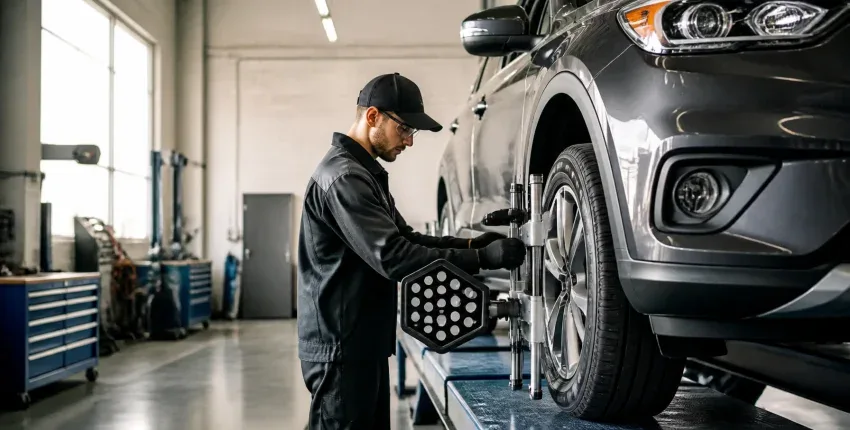
A wheel alignment adjusts the steering and suspension angles that control how your wheels sit and roll on the road. The wheels are set according to the specifications for your vehicle’s make and model.
Technicians typically check three primary alignment angles:
- Camber: The inward or outward tilt of the tire when viewed from the front.
- Toe: Whether the front edges of the tires point slightly inward or outward.
- Caster: The angle that affects steering stability and how the steering returns after a turn.
Correct alignment helps your tires maintain even contact with the road. It also allows your vehicle to track straight and respond predictably when you steer, brake, or turn.
A wheel alignment does not usually involve replacing the tires. Instead, the technician measures the current settings and makes adjustments when the vehicle’s components allow it. If worn suspension or steering parts prevent proper adjustment, those issues may need to be repaired first.
Four Signs Your Vehicle May Need an Alignment
Alignment problems are not always obvious at first. Inspecting your tires and paying attention to changes in handling can help you identify a problem early.
1. Your Vehicle Pulls to One Side
A vehicle that consistently drifts or pulls left or right on a level road may have an alignment issue. You may find yourself making constant steering corrections to keep the vehicle moving straight.
Road slope, wind, and tire pressure can also affect how a vehicle tracks. However, a persistent pull should be checked by a qualified technician. Driving with this problem can place additional wear on your tires and make the vehicle harder to control.
2. Your Tires Wear Unevenly or Quickly
Properly aligned tires should wear relatively evenly across the tread. Misalignment can cause one edge of a tire to wear much faster than the rest.
Common patterns include:
- Excessive wear on the inside edge
- Excessive wear on the outside edge
- Feathered tread that feels smooth in one direction and sharp in the other
- One tire wearing faster than the others
- Rapid tread loss after installing new tires
Check the full width of your tire tread, not only the outside edge. Some alignment-related wear can develop on the inside where it is difficult to see without removing or lifting the vehicle.
3. Your Steering Wheel Is Crooked
If your steering wheel is off-center while the vehicle is traveling straight, the alignment may be out of specification. The steering wheel should remain centered when the vehicle is driving on a level road.
An off-center steering wheel can also indicate a steering or suspension concern. A professional inspection can determine whether an alignment adjustment is needed or whether another repair should be completed first.
4. Your Steering Wheel Vibrates
A shaking or vibrating steering wheel, especially at certain speeds, should not be ignored. Alignment can contribute to vibration, but it is not the only possible cause.
Vibration may also come from:
- An unbalanced tire and wheel
- A bent wheel
- A damaged tire
- Worn suspension components
- Brake or rotor problems
The combination of vibration, pulling, and uneven tire wear makes an alignment inspection especially important. A tire inspection can help identify the source before the problem causes more damage.
Wheel Alignment vs. Tire Balancing
Wheel alignment and tire balancing are different services. Both support a smoother, safer ride, but they correct different conditions.
| Service | What it corrects | Common symptoms |
|---|---|---|
| Wheel alignment | The angles and direction of the wheels | Pulling, crooked steering wheel, uneven edge wear, poor handling |
| Tire balancing | Uneven weight distribution in the tire and wheel assembly | Speed-related vibration, shaking, or a wobbling feeling |
During tire balancing, a technician adds small weights to the wheel to help it rotate evenly. Balancing is commonly performed when new tires are installed and when a vibration develops.
An alignment adjusts the vehicle’s steering and suspension settings. It is often recommended after hitting a pothole or curb, after a collision, when new suspension components are installed, or when alignment symptoms appear.
Some vehicles may need both services. For example, a vehicle with a crooked steering wheel and highway-speed vibration may have an alignment issue and an imbalance. A complete inspection helps determine the correct solution.
How Much Does a Wheel Alignment Cost?
Typical U.S. wheel alignment prices often fall within these general ranges:
- Two-wheel or front-end alignment: Approximately $50 to $100
- Four-wheel alignment: Approximately $75 to $150
- Specialty vehicles or additional repairs: Costs may be higher
The final price depends on your vehicle, the type of alignment required, local labor rates, and whether worn parts need to be replaced before the alignment can be completed.
These figures are general estimates, not a guaranteed quote. A reputable wheel alignment shop should explain the recommended service and any additional repair needs before work begins. At Zeetailz, Inc, our family-owned team focuses on honest pricing and clear communication so you understand what your vehicle needs.
How Often Should You Get an Alignment?
There is no single schedule that applies to every vehicle. A practical maintenance guideline is to have the alignment checked about once a year or every 6,000 to 12,000 miles, depending on your vehicle and driving conditions.
You should also schedule an alignment check when:
- You hit a significant pothole
- You strike a curb
- You are involved in an accident
- You install new tires
- You replace steering or suspension parts
- Your vehicle begins pulling
- Your steering wheel becomes off-center
- You notice uneven or rapid tire wear
Pennsylvania roads can expose vehicles to potholes, rough pavement, and seasonal road damage. If your vehicle has experienced a hard impact, an inspection can identify alignment changes before they damage a new set of tires.
Why Proper Alignment Matters
It Helps Extend Tire Life
Misaligned tires can scrub against the pavement instead of rolling smoothly. This creates uneven friction and wears down specific sections of the tread.
An alignment cannot repair a tire that is already severely worn. However, correcting the underlying problem can help prevent the same damage to your current tires or a new set.
Regular tire rotations and correct tire pressure also support even wear. Zeetailz provides tire rotations, tire inspections, pressure checks, balancing, and alignment services to help maintain your tires throughout their service life.
It Supports Safer Handling
A vehicle that pulls or responds inconsistently can be more difficult to control. This may become more noticeable during braking, turning, or driving on wet roads.
Proper alignment helps the tires maintain consistent contact with the road. It also supports predictable steering and handling, which are important for everyday driving and emergency maneuvers.
Alignment is only one part of safe vehicle operation. Tires should also have appropriate tread depth and air pressure, and the steering and suspension systems should be in good condition.
It Can Improve Fuel Economy
When tires are pointed in different directions, they create additional rolling resistance. The engine may need to work harder to move the vehicle forward.
Correct alignment does not guarantee a specific fuel savings amount. However, reducing unnecessary tire drag, maintaining correct tire pressure, and keeping up with scheduled maintenance can help your vehicle operate more efficiently.
It Helps Protect Related Components
Misalignment can increase stress on tires, steering parts, and suspension components. If worn parts are not addressed, the vehicle may not hold its alignment properly.
A technician should inspect the complete system when symptoms appear. Replacing a worn component before performing an alignment can help the vehicle maintain the correct settings.
Choose a Local Wheel Alignment Shop in Bath, PA
Zeetailz, Inc is a family-owned and operated auto repair shop serving Bath, PA and surrounding areas. Our experienced technicians service all makes and models and provide practical recommendations based on your vehicle’s condition.
In addition to alignments, we offer tire services, general maintenance, brake and rotor service, suspension repairs, inspections, and towing. We use trusted NAPA parts on every repair to support dependable results.
If your vehicle pulls to one side, your steering wheel is crooked, your tires show uneven wear, or you notice vibration, schedule an inspection before the problem becomes more costly.
Book an appointment with Zeetailz, Inc for tire service or wheel alignment in Bath, PA. You can also contact our shop at 484-246-7400.